

Currently Empty: ₹0.00



Uncategorized
5 Powerful Ways Overusing AI Prompts Can Harm Students’ Creativity and Critical Thinking
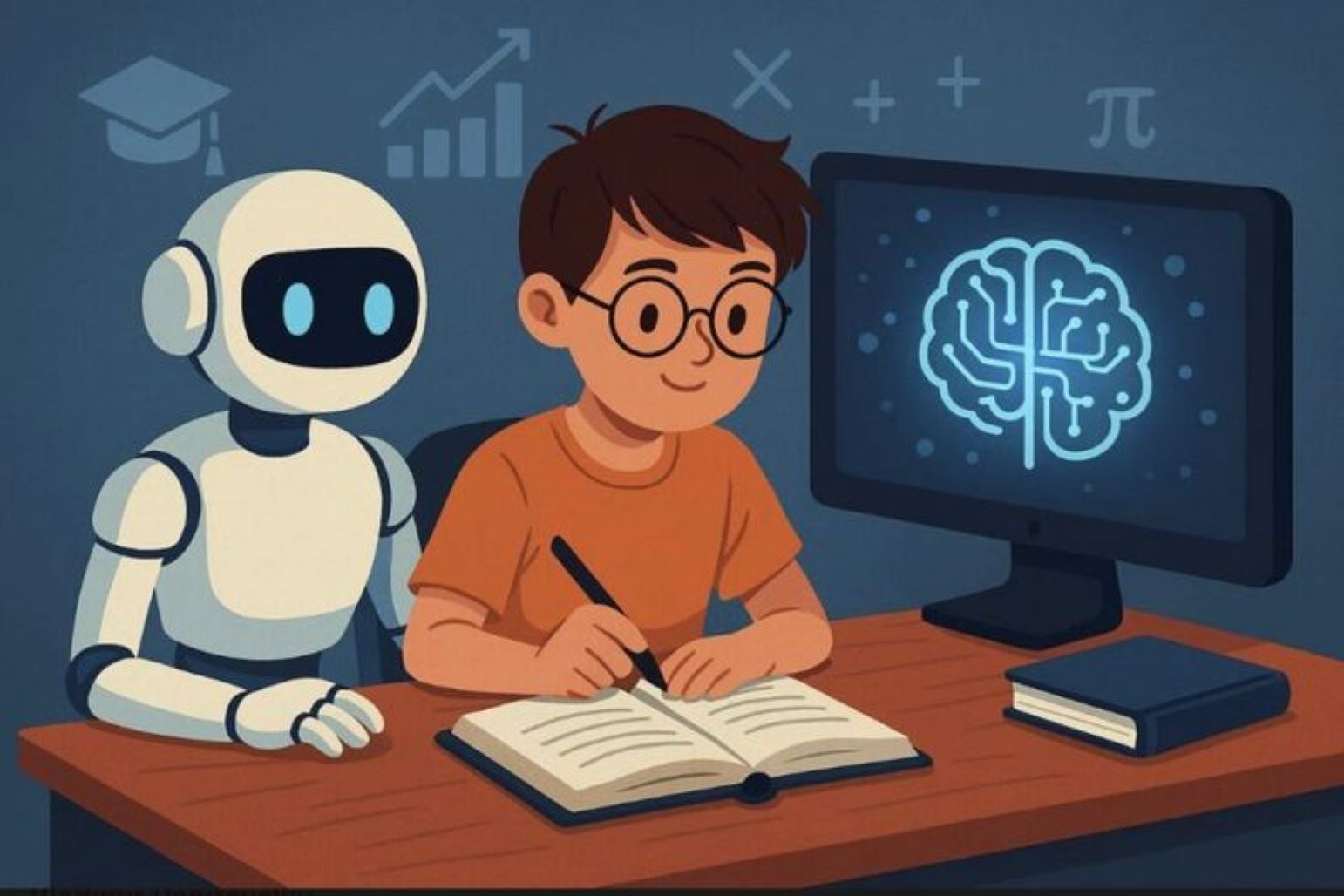
Are AI prompts dulling students’ minds? Explore 47 ways overusing AI apps or AI chat suppresses critical thinking and original ideas in education.
Table of Contents
Introduction
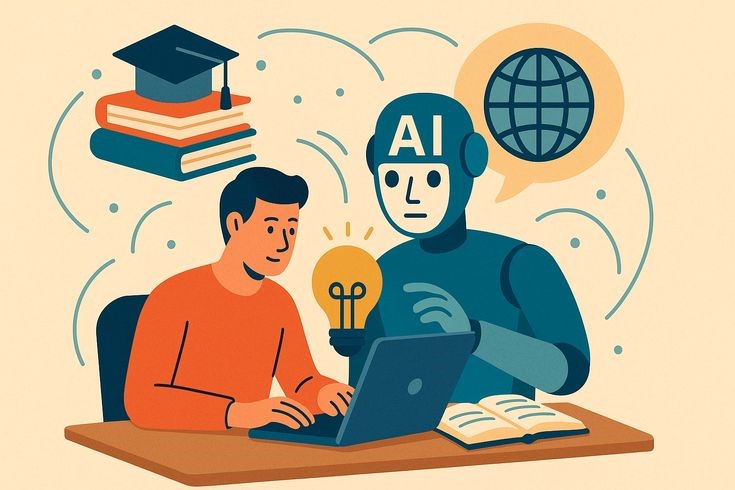
Artificial intelligence use has tremendously increased in the education sector. Students are taking the help of AI prompts in getting the answers to questions and making a concept easy. AI, which started as a facilitator, is now taking a place as a crucial facilitator.
AI prompts are also helping in solving problems. When students have to get data that requires a lot of search engine searches and any research that will require brainstorming, all these tasks can be solved by AI prompts in minutes. That helps in saving students’ time and efforts.
Generative AI just receives the ai prompts and then creates the result based on the available data. Students can get many help from AI in education. There are many AI apps that are making handwritten notes, solving doubts, making the language of books easy, or making projects from their data. All this work can be effectively handled by AI prompts in a few minutes. That is the biggest reason why students are preferring AI over researching for themselves.
AI was made for convenience, but as we say, overuse of anything is harmful. These AI apps are tremendously affecting the learning capacities of people. What started as convenience is now becoming dependence, as people have started depending. Students are now not brainstorming any query or researching it from books; they just place prompts in AI apps and get results. That is acting as a disadvantage for the problem-solving skills of students.
Education is not about learning concepts and getting answers; it is about creating skills like problem-solving, analytics, communication, analysis, creating reports, etc. And when all this will be handled by AI, then how will they develop such skills? So, for developing such skills, students should avoid this. Using AI can be convenient where the research and solving is beyond your limits, but if a student can do this work, then he must solve it on his own.
AI prompts can reduce independent thinking
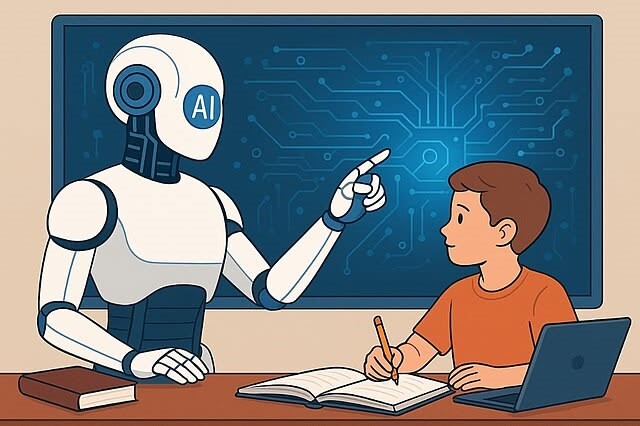
One of the biggest concerns of excessive AI prompts in AI apps is that students stop thinking independently. Instead of that, they just search the query over search engines whenever they find a query and have any confusion. Instead of trying to search over books, teachers, or any other sources, or trying to solve themselves, they cannot develop skills like problem-solving and analytics. But as AI apps are there, they just enter AI prompts there and can get the result. That stops the creativity of their mind.
For example, a teacher may have given a theme to write on, and instead of writing on it themselves, students just enter the AI prompt in an AI app and get the required essay. They just copy-paste that. If they had written it on their own, they could understand the topic, but as they have just entered the prompts and got the result, they cannot form their own ideas and learn more about the topic.
The goal of the essay was to develop the writing, thinking, and creative soft skills of students, which is discouraged by AI, as AI has provided all the information. This essay can be good, but not a sign of the effectiveness of the work of the student. If he had independently searched the article, then he may know from where the content is coming, what the goal of the writing topic is, what are the themes, he may know about the topic, what are the evidences that are supporting this, do I agree with the point, and what are my views over this.
All these queries can be answered by this topic, but if the writer has made it artificially, then how can this goal be fulfilled?
Students will gradually develop the habit of using AI prompts and stop searching on their own, discouraging their mind development. All this proves that AI prompts can be helpful but not dependable.
Overuse affects creativity
Creativity comes from exploring content ideas, making connections, and sometimes making mistakes. Students are able to create such content without taking help from AI, but students, due to technology, are generating this through AI apps that are affecting their skills. Instead of finding the perfect title, heading, examples, and solutions, they just generate it through AI tools, which is wrong from the perspective of the growth of students’ analysis skills.
Students can say to AI apps through AI chat to create the topic, story characters, story plot, story ending, and sequences. That will be generated by AI, and ultimately, students copy and paste it into notebooks. This can make the work quick, but what about the educational outcomes? Education is not about getting results; it is more about the process through which you have reached the results. That is the skill, and perfect skills will lead you in life as they develop through your own efforts.
Students may depend on instant answers
AI tools provide instant results. Students just have to provide AI prompts, and AI, in minutes, provides all the solutions to problems and doubts and creates anything according to prompts. But this thing develops a sense of dependence on the AI app, and people will also create a habit of fast answers that will affect their level of patience.
In the future, if they have to solve any problem on their own, then if that thing will require patience and if this is not developed in them, they might get frustrated and agitated, leading to stress and anger. So, a student must be taught patience and humbleness from childhood, which will be discouraged through AI.
Students, if they put in the effort on their own to create the content and get the result from a lot of searching, they will understand that things take time and it is needed to carefully look into the matter and then derive a conclusion. But as students get results at the click of prompts, they will not be able to develop such a skill for the future. It is good to take the help of AI as a facilitator, like for data that may take days, so that is fine, but creating entire research through AI is harmful for the development of skills at such a small age.
AI can reduce the value of making mistakes
Mistakes are the chance of learning for students. Mistakes cannot be seen as wrong; even mistakes are a sign that you are trying something because when you will try something in life, every time you have to face many situations that will lead to wrong decisions sometimes, but those mistakes make you prepare for the future. A student, when getting to learn, makes mistakes, and instead of trying by herself to find solutions, if they insert a prompt in AI tools, then the result will be correct, but the student will not get such a chance to learn on their own.
Imagine a student is trying to solve a mathematical mistake. He may try many times and then get results, so that will guide him on how to get results. But just think, instead of that, a student who just inserts a prompt and gets the solution of where he is doing a mistake, so what will be the results? The results will be only the answer, and the student may not know how to reach an answer, he may not know where he has made a mistake, how to not make such a mistake in the future, and in the future also, if this type of mistake arises, then how to solve that.
Imagine a student is trying to solve a mathematical mistake. He may try many times and then get results, so that will guide him on how to get results. But just think, instead of that, a student who just inserts a prompt and gets the solution of where he is doing a mistake, so what will be the results? The results will be only the answer, and the student may not know how to reach an answer, he may not know where he has made a mistake, how to not make such a mistake in the future, and in the future also, if this type of mistake arises, then how to solve that.
Using AI after writing the whole article can be beneficial, as that will give enough time to research and do analysis, and for proofreading and solving problems that are impossible to solve for you, AI can be used. But instead of that, you can do anything on your own.
AI can make learning a passive learning

AI apps can make learning passive, as students, for their work, will depend on AI tools, and due to this, they will not be taking part actively in these types of their own work. That discourages active learning. Active learning is about participation, where students participate, ask questions, bring to conclusions, discuss ideas, solve problems, conduct research, and create something of their own.
Active learning is that where students are active; they do everything and make efforts. Instead of just depending on AI prompts for answers, they engage in content on their own. That is not the case nowadays, as students are passively learning now through AI.
Conclusion
AI prompts can act as a help for students, but it is wrong to entirely depend on AI prompts to get results. Students nowadays, instead of finding results on their own, are dependent on AI prompts, which is affecting the development of skills among them. It is good to use AI prompts in AI apps for help, but entirely depending on them is really wrong from the purpose of education. A student should become an active learner and try to get answers on their own.
FAQs
What is generative AI?
Generative AI just receives the ai prompts and then creates the result based on the available data.
How do AI prompts discourage creativity?
Creativity comes from exploring content ideas, making connections, and sometimes making mistakes. Students are able to create such content without taking help from AI, but students, due to technology, are generating this through AI apps that are affecting their skills.
How do AI prompts lead students to become passive learners?
AI apps can make learning passive, as students, for their work, will depend on AI tools, and due to this, they will not be taking part actively in these types of their own work.
How are students avoiding mistakes by generating results through AI prompts?
Mistakes make you prepare for the future. A student, when getting to learn, makes mistakes, and instead of trying by herself to find solutions, if they insert a prompt in AI tools, then the result will be correct, but the student will not get such a chance to learn on their own.
What should a student do to get the required skills?
students should try to solve by their own instead of getting answers from ai.
What are the skills that are affected by AI prompts?
Education is not about learning concepts and getting answers; it is about creating skills like problem-solving, analytics, communication, analysis, creating reports, etc. And when all this will be handled by AI prompts then they will be affected.