

Currently Empty: ₹0.00



Uncategorized
Online Education in 2026 and Beyond: Opportunities, Challenges, and Emerging Possibilities


Here the article shows online education in 2026 and beyond: its opportunities, challenges, and emerging possibilities. The era of education is changing as the technology changes at a higher pace. E-learning is helping students to learn effectively in their geographical location comfortably.
Table of Contents
Introduction to online education in 2026
After COVID, education has changed completely. What started as a necessity during the pandemic has now become both a necessity and a convenience. Yes, here we are talking about online education. Earlier, online education emerged as a necessity because students could not step outside their homes and had to attend online classes. However, today, students are increasingly interested in online education because of the numerous benefits it offers, such as flexibility, accessibility, and convenience.
Education has changed completely. Things have changed; we have shifted from classrooms to screens, from books to tablets, from printed paper to digital assignments, from class tests to online tests, and from teaching face to face to teaching on Google Meet. All this change is due to the technology-driven environment.
It does not only show the change, but more than that, it is a revolution in the education environment. As the technology is changing, the working environment is changing, and students are able to get education effectively and efficiently. More and more people are getting education irrespective of their age group and geographical location; they are getting education.
Education is becoming smarter, more personalized, more effective, and more convenient. The experience of getting this education has changed a lot. Students are experiencing a new way of getting education, and all this is making changes in students’ learning methods and experiences.
Rise of online education in 2026
Online education demand has increased tremendously. Students are now learning without any geographical limits; they can access education around the world from anywhere with the help of laptops, smartphones, and tablets. Not only can they get education anywhere, but also *any* resource. There is no limit to studying from only one teacher.
It does not matter what age group you are in or what type of education you want to get; you can learn corporate terms, gain skills, and learn from experts in that particular field without any geographical limits. They can get these things without even going anywhere, disturbing their daily routine, or wasting time traveling.
Technological upgradation has made learning interactive, interesting, and informative. Videos and graphics attract students to focus their concentration on the study material and help them recognize concepts easily. Digital classrooms are the new classrooms for students, where they can learn without barriers.
Scope of online education
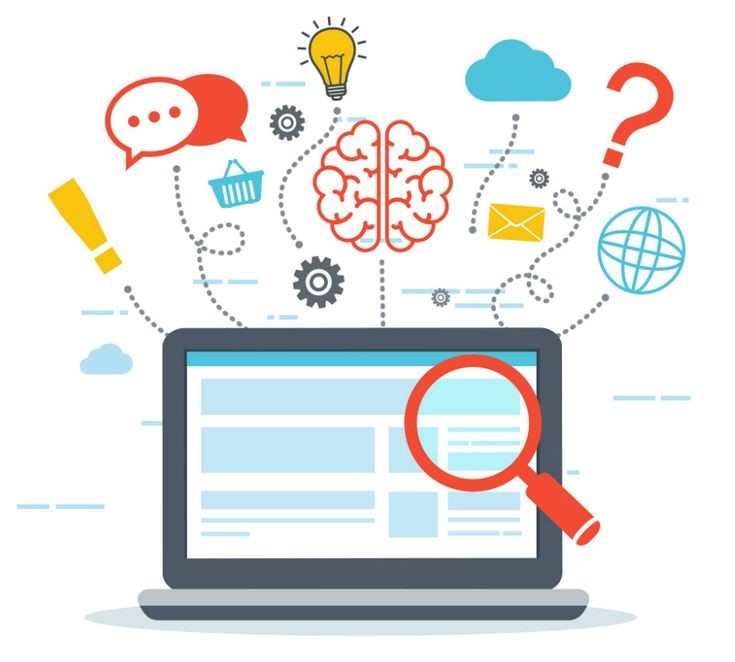
E-learning provides personalized learning methods to students. Through artificial intelligence, students’ interests can be calculated by analyzing their behavior, and by analyzing it, study material and content can be recommended to them according to their strengths and weaknesses.
In traditional methods, all students get the same lessons irrespective of their interests and weaknesses. The same teacher gives education to students collectively, unlike in modern methods of education where personalized education is provided to them. This all helps students learn difficult words and terms easily, and they can understand concepts in the way they like.
Today’s corporate sector does not watch degrees; what they see is the skill of that particular person. Education is not restricted to degrees only. Students want to learn those skills through which they can build their careers and join platforms where skill advancement courses are available. This focus on practical learning affects students.
Cybersecurity courses, coding, data analytics, data security, etc., are in high demand nowadays. Various online learning platforms are heavily investing in these platforms, and all this has changed the era. Digital certificates that students get after completing a particular e-learning course help them get internships and certificates.
As we discussed earlier, virtual learning in 2026 has removed the barrier of studying at one place. People can get education from any part of the world, from any resource, and from any online learning platform. This removal of geographical boundaries helps learners to learn with comfort and ease. This shift to online education from the traditional one has not only helped students but also teachers, as they do not have to limit themselves to their territory; they can show their skills from anywhere.
Education is not limited to schools and universities alone now. People can gain skills even after university, and they can learn new skills while working also. If they want, they can refine and upgrade their skills. It is a saying that learning never stops, and through online education, it is possible now. Learning is not limited to classrooms alone; a person can learn at any age.
What Is Going to Be Changed in Education in 2026 and Beyond?
Virtual learning in 2026 and beyond is much more interactive and advanced. New technologies, new ways, new methods, new routines, and new resources have completely changed the education system.
The major factor behind all these changes is automated technology and AI. AI gives feedback to students and solves their doubts, which in traditional education were solved by teachers the next day. AI helps them gather resources from different platforms, studies student behavior, provides test sheets, and analyzes their performance.
Augmented reality and virtual reality are helping students learn concepts and understand them in an easy way. This helps them experience a practical environment and shows them real-life situations, which helps students practically experience things.
Medical students can see surgery work and experience it in this stimulated environment. Science students can virtually do experiments without any hazards, and history students can explore the world of ancient times. This will help them learn dates and the subject matter more easily.
Many people say that if a student is taking online education, then he has to do this individually, but that is not necessary. Even study groups are formed in virtual learning; like, you can see study groups of students on Google Meet where a teacher and many students are there. The teacher teaches on a digital screen while students show their faces using cameras and ask questions there.
What Challenges Online Education Is Facing in 2026?
Online education is facing a lot of challenges these days because if a thing is growing tremendously, then there are chances of various challenges holding back the growth.
The major issue is the internet. Not all people have access to the internet. There are several parts across the globe where even electricity is hard to reach. In these areas, internet connectivity is not possible, so people do not have access to this resource. This restricts access to e-learning everywhere.
It is really hard to maintain the concentration of students during e-learning. Students often get attracted to social media and other things because of the lack of a strict environment that is present in traditional education. Unserious students cannot be able to learn in this environment, as their concentration gets affected due to that environment.
Cybersecurity is also a reason that holds back the growth of online education. There are various reports of cases of cyber fraud reported daily. Students are not able to differentiate between links, and they click different links that affect their privacy. Privacy protection is necessary for the growth of online education.
Long hours of screen time affect the health of students. It results in dry eyes, cervical pain, long sitting hours that result in weight gain, headaches, migraines, spinal pain, etc. People who have long screen time often get specs at an early age.
Possibilities of Growth Beyond 2026

The topic is about growth; then what is the reason for confusion? We can already see the tremendous change, which is going to increase in the future. As people have shifted to a technology-driven environment, they are feeling comfortable in their environment and want to study there.
AI: Hello, Students.
In the future, AI will become tutors and teachers for children. Today, various technologies are teaching AI how to do work, which is helping it to understand patterns. In the future, AI is going to help students with concepts, and it will work as an educator for online learning platforms.
Content Like the YT Shorts You See
Students always want concise and interactive content. They do not want huge explanations of the content, so in the future, education is going to focus on quick tutorials. Mobile-friendly formats are going to be popularized in the future.
Blockchain for Credential Verification
This thing is going to revolutionize academic verification. Here, students can secure their digital certificates to reduce fraud and simplify the task at the time of verification during job allotment.
Boundaries Will Be Demolished
The boundaries that divide national and international students are going to part ways. Students from different nations are going to study in the same environment and at the same time while sitting at their homes. Students from the whole globe can be collected in the same digital classroom.
Are Businesses Getting Any Benefits Through This?
Investments in huge quantities are being incurred by online learning platforms these days to grow online education so that workplace performance can be increased. This benefits a company by:
- Offering flexible learning schedules
- Employee training will be standardised
- Employee productivity can be increased
- Unskilled employees can get skills
Can Teachers Be Replaced Due to Virtual Learning in 2026?

Teachers are irreplaceable in today’s environment. Technology can only make their work easy and interactive; it can never replace them. The role of teachers will remain unchanged, and no technology can ever take the mentorship that a teacher can give. Teachers can change their methods; instead of traditional classrooms, they can teach on online education platforms.
Future of Education: Beyond 2026

There are chances of tremendous change after 2026 in the online education era. The changes that you are going to notice are the use of artificial intelligence, learning through digital voices, personalized learning, use of multiple languages, learning in a fun way, virtual learning and augmented learning, learning in a fun way through games, online tests, online reports, online feedback, and guiding students by studying their interests and behavior through augmented technology.
Conclusion
Online education has tremendous growth in the future as technology is updating, so the change in online education is going to be noticed. The change in the education system is due to student behavior. Today’s students want to learn a lot; they do not want to restrict themselves to the four walls of a classroom with the same knowledge. They want to explore the new era and the new pace by learning new skills and upgrading their knowledge.
Some people are facing challenges in accepting this era due to internet, cybersecurity, and resource barriers, but as technology is changing, the world is focusing on new ways of education. Teachers are also accepting the method of virtual learning in 2026. E-learning is finding its way by integrating international and national students.
FAQs (Frequently Asked Questions)
What is online education?
Online education is a type of education where you can get education from anywhere through the use of the internet on laptops, smartphones, etc.
What are the benefits of virtual learning in 2026?
Major benefits are affordability, accessibility, skill development, and the comfort of your own space because of the lack of geographical limitations.
Are businesses getting any benefits through this?
Yes, online learning platforms are providing courses related to skill advancement like cybersecurity and data analytics that help in human resource training.