

Currently Empty: ₹0.00



Uncategorized
Education Before and After Covid-19: 10 Powerful Changes That Transformed Learning

Here in this article, you are going to read how education before and after covid-19 has transformed learning. In this article, 10 powerful changes in learning have been explained. After the pandemic the virtual classrooms have taken the place of traditional classrooms that are still prevailing.
Table of Contents
Introduction
Education is a basic need of humans, as it gives a person the chance to be aware and informed about the surroundings and to take action whenever it is required.
Every person has a right to get education at the basic level so that that person will be smart enough to respond to the challenges of life with confidence and be prepared enough to get a secured job and work. The earlier system of education was what we called traditional, where the classes took place in the classroom and teachers gave lectures there. The students noted all the things in notebooks and revised at home. They often gave homework. All the study was based on books.
There was the use of technology also in education, but at small ratios only; not the whole of education was dependent on that. The teachers and all students used to use technology to learn the facts of books in an easy way. But a tragedy, or we can say a pandemic, happened that changed the entire system of education: the spread of COVID-19. Yeah, after this, the whole education system changed. The students were not allowed to attend school, and the teachers were not allowed to teach in school. This changed the entire view of traditional education.
The force that attracted the students to never come out of that type of education is the tremendous and attractive benefits of this education. The flexibility, efficiency, and comfort all became the magnets for students to never come out of the era of digital learning. With this advancement, the traditional classrooms also have changed. They have modernized themselves according to the needs of students and the wants of the new era. The classrooms, the labs, the books, and the study material have all been revolutionized by the impact of that pandemic time.
In this article, you are going to see the 10 powerful changes that have transformed education after COVID-19 and its impact on the students. You will be surprised by the transformation before and after COVID-19 and the reasons behind this transformation and also how this is affecting the students’ study life now.
Modernized classrooms
Before COVID-19, all the students used to go to schools with books and notebooks and take education in classrooms where the teachers gave lectures, and they wrote the lectures in their notes and then used to revise them at home. But as COVID-19 came, the teachers were forced to teach at home through Google Meet and Zoom, etc., and assignments were sent through WhatsApp or mail, which they had to complete. The teachers also had to take the lectures through the use of pen tablets and digital boards to make the students understand the concepts.
After COVID-19 ended, the traditional classrooms remained no more. They have taken the change of modernized classrooms where the teachers give lectures on smart boards, and they often send the lecture notes and assignments in the form of PDFs to the students on smartphones. The students often get recorded videos of lectures to watch in case they have missed school due to various reasons.
This has become a blessing for some students because they are not restricted to their classrooms now. They can explore the vast world of information and learning through their smart tabs and laptops. The students who earlier had to take notes of lectures when they were on holiday can now see them through recorded lectures.
Technology in Place of Books
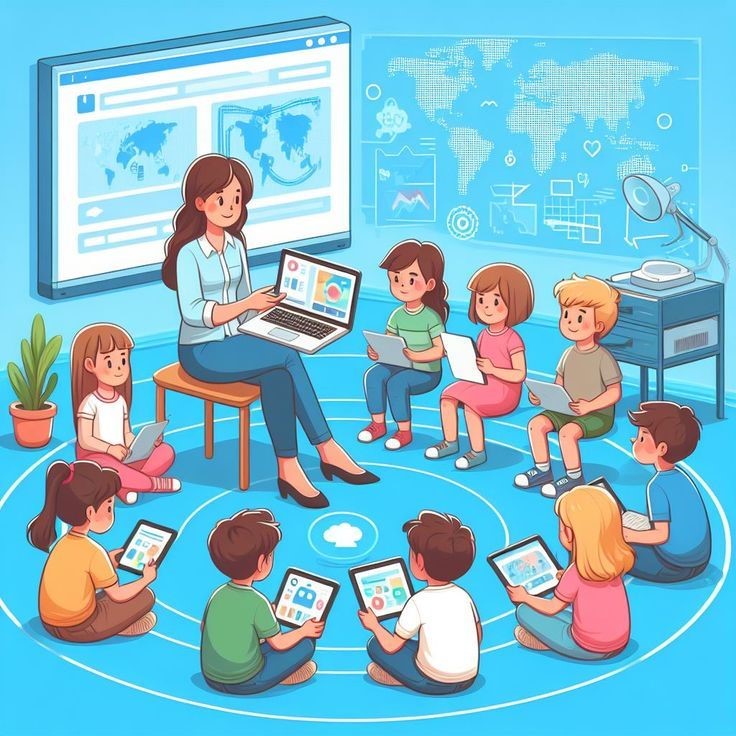
Technology was used as an additional tool in education before the pandemic, but as of now it has completely taken the place of many things. Now all education has become dependent on laptops, tablets, smartphones, digital boards, and educational apps. Now, in place of old boards, teachers are using modern digital boards in the classrooms. They are preparing presentations in a creative way and making attractive visual notes with the help of technology. Teachers send these things directly to the digital devices of the students, and the students learn concepts through the digital material.
AI, being the latest technology, is also used nowadays in educational platforms to provide students with personalized learning, feedback, assessments, research, and many more things through its automated technology. Some people think that it might take the place of teachers, but it is not reality. It will only assist the teachers in providing the best education to their students, not take their place. The teachers can take the help of technology to make the information in books creative and interesting so that students might not find it confusing and to keep recordings of lectures to give to students if they are absent or have not understood the concept properly.
Flexibility: A Blessing for Students
The biggest reason behind the success of online education is the flexibility. Earlier, the students had to attend the learning organization at fixed timings, schedules, and class routines. If a student missed one day in school, then he had to leave the important topics and material. But now the things have completely changed. The students can get the recorded lecture lessons and notes at home through platforms and apps. If a student wants to revise a particular concept, then he can also revise it with the help of these online lectures.
These things provide a chance for the students to learn at their own pace by matching their capability to achieve their learning objectives. This makes them accountable for their learning. If a progressive student wants to explore beyond the books, then he can explore various learning materials over the internet. This technology is helpful from both perspectives and for both sections of students. This thing has also emerged as the concept of hybrid learning, where the students receive both the offline and online experiences, and this form is popular for providing education in 2026.
Teachers Developed Digital Skills
The pandemic raised new challenges for the teachers. There were many teachers who were unaware of technology at the time of the pandemic, but because of the need at that time, they had to learn the apps and software related to study, like taking classes through platforms, making notes, sending them, taking tests online, giving feedback, recording lectures, and virtual communication. This improved their digital skills and provided a new way of providing classes to the students. The teachers also started learning online the ways through which they could make the topics interesting.
Rapid adaptation during the time of the COVID-19 pandemic changed the way of teaching. Now, today, the educators are providing lectures on digital boards, using digital tools to make interactive notes, providing them to students with the help of digital media, taking assessments online, providing personalized training to them, providing them with links to extra content they must see, solving their doubts online, etc.
Nowadays, digital skills, awareness, and knowledge are being provided under professional development programs so that they are aware of the changes in the educational system in the future.
Students Became Independent Learners

Traditional education was about forcing students to sit at fixed schedules and timings in the classrooms. They had to take the lectures even when they were not interested, wanted to avoid the lectures, or wanted to take the classes of different subjects. These things have changed through virtual learning. Now they are accountable for their own learning. They can learn the subjects they want; they can study the material that interests them, and they can understand the concepts at their own pace. This makes them independent.
Many students cope with these things; meanwhile, some children are not interested in studying, so this thing is not made for them. The students learn time management, independent thinking, and self-discipline, which will not only help them now but also in the future to acquire new skills with determination. Students become ready for the future, independent, intelligent, motivated, and inspired. That will become the reason for them to lead in life.
Online Assessments Changed Evaluation Methods
COVID has brought various changes in learning that have also changed the evaluation patterns. Earlier, teachers were focused on taking physical written exams; they have changed to online tests, assessments, evaluations, presentations, projects, etc., that are helping the teachers to evaluate the students’ performance and track their progress. This thing has changed the focus of teachers from promoting memory-based learning to understanding-based education in 2026.
Parents have become aware of their duties towards tutoring their children.
Learning after COVID has changed. Now the parents are more involved in the education of their children. Before COVID, they used to handle only their homework, but as the COVID pandemic hit, they handed over their digital devices to them to take the classes and lectures and often helped the students in learning to handle new digital skills. The awareness drive and the parents started taking interest in the education of their children, how they are learning, progressing, all of it.
Mental health received utmost attention
Learning after COVID-19 has shifted to the virtual from the classrooms, which has created isolation for students. In COVID also, the students felt isolation that led to an increase in sadness, fatigue, etc. Parents and teachers realized that education is not only important; students want social interaction also for their holistic development. Mental health has taken importance now. Many educational institutes are organizing counseling sessions and stress relief activities. They have also stopped the mental harassment of students.
Virtual skills became essential for future careers
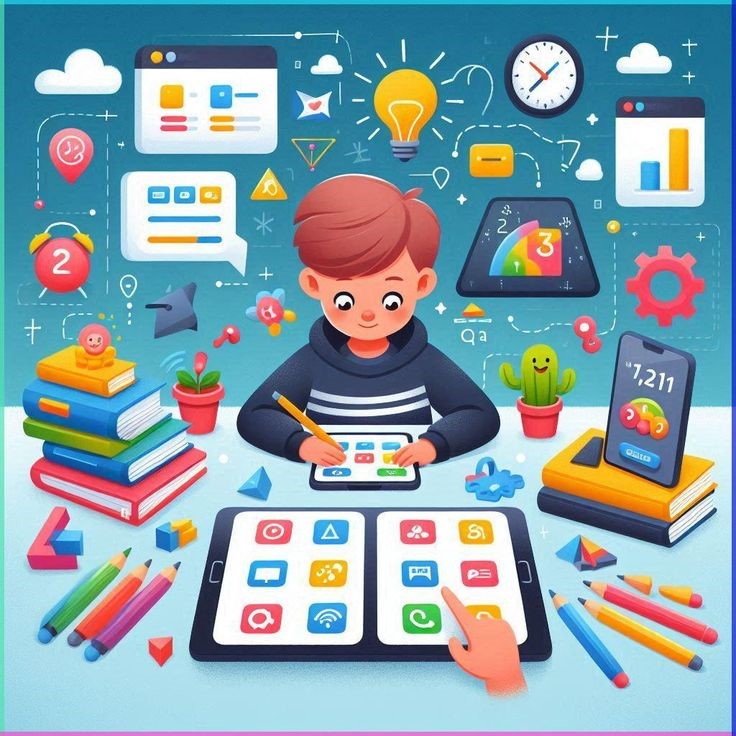
As the learning after COVID has changed, so has the employment. The employers are now accepting the digital skills in the employees rather than the degrees. The new virtual era is making the students ready for future employability needs. The education in 2026 is giving importance to coding, digital research, cybersecurity, and data literacy in the curriculum that is making students ready for the future.
Changes in learning are still prevailing after COVID.

Even after COVID ended, the changes in learning are still continuing, like artificial intelligence use in educational platforms, virtual reality used in teaching students the real world, augmented reality, etc., which are now involved in the tutoring system. Students are now accessing learning from digital global classrooms, doing experiments and creativity in virtual labs, and exploring digital libraries.
The focus has now shifted to skill-based education through involving coding, data security, and creative skills in education rather than just learning on blackboards only.
Learning after COVID has evolved rather than just returning to the old traditional methods, and with time it will continue in the future according to the needs of the new digital world.
Conclusion
So, what started as necessity is now continuing as the new methods of learning, evolving on a continuous basis. The students are now learning independently at their own comfort and flexibility. The new digital skills are taking on such importance that educational institutes are including them in their curriculum. The teachers are providing recorded lectures and creative digital notes to students, and also, they are taking their online tests and assessments and providing them feedback.
The use of AI has changed education in 2026. It is helping in providing personalized education to students and giving them feedback. Learning after COVID has focused on acquiring learning through virtual reality, digital boards, and augmented technology and providing coaching in a way that attracts the students. So we can say that COVID has changed learning completely, and the changes in learning are still prevailing even after the pandemic.
FAQs
Why has mental health received attention after COVID-19 in students?
Mental health is important, but the attention of parents and teachers has increased on the mental health of students after COVID-19, as during the pandemic they have experienced that only studying is not important; the students should get stress-relief activities also.
What are the changes that are evolving after COVID-19 also?
The use of AI, augmented technology, and virtual learning has taken place in modern classrooms.
How does online education provide flexible learning?
The online tutoring is flexible, as they can receive online recorded lectures, notes, and quizzes, and they can learn at their own comfort and schedule anywhere in the world.
How students became independent learners in online education?
Traditional education was about forcing students to sit at fixed schedules and timings in the classrooms. They had to take the lectures even when they were not interested, wanted to avoid the lectures, or wanted to take the classes of different subjects. These things have changed through virtual learning. Now they are accountable for their own learning. They can learn the subjects they want; they can study the material that interests them, and they can understand the concepts at their own pace. This makes them independent.
Many students cope with these things; meanwhile, some children are not interested in studying, so this thing is not made for them. The students learn time management, independent thinking, and self-discipline, which will not only help them now but also in the future to acquire new skills with determination. Students become ready for the future, independent, intelligent, motivated, and inspired. That will become the reason for them to lead in life.
How students see flexibility as blessing in online education?
The biggest reason behind the success of online education is the flexibility. Earlier, the students had to attend the learning organization at fixed timings, schedules, and class routines. If a student missed one day in school, then he had to leave the important topics and material. But now the things have completely changed. The students can get the recorded lecture lessons and notes at home through platforms and apps. If a student wants to revise a particular concept, then he can also revise it with the help of these online lectures.
These things provide a chance for the students to learn at their own pace by matching their capability to achieve their learning objectives. This makes them accountable for their learning. If a progressive student wants to explore beyond the books, then he can explore various learning materials over the internet. This technology is helpful from both perspectives and for both sections of students. This thing has also emerged as the concept of hybrid learning, where the students receive both the offline and online experiences, and this form is popular for providing education in 2026.
What is the use of AI in learning?
AI provides the automated experience where it provides content according to students’ needs and interests.