

Currently Empty: ₹0.00



Uncategorized
How Artificial intelligence in education is revolutionizing learning in 2026: opportunities, risks, and innovations
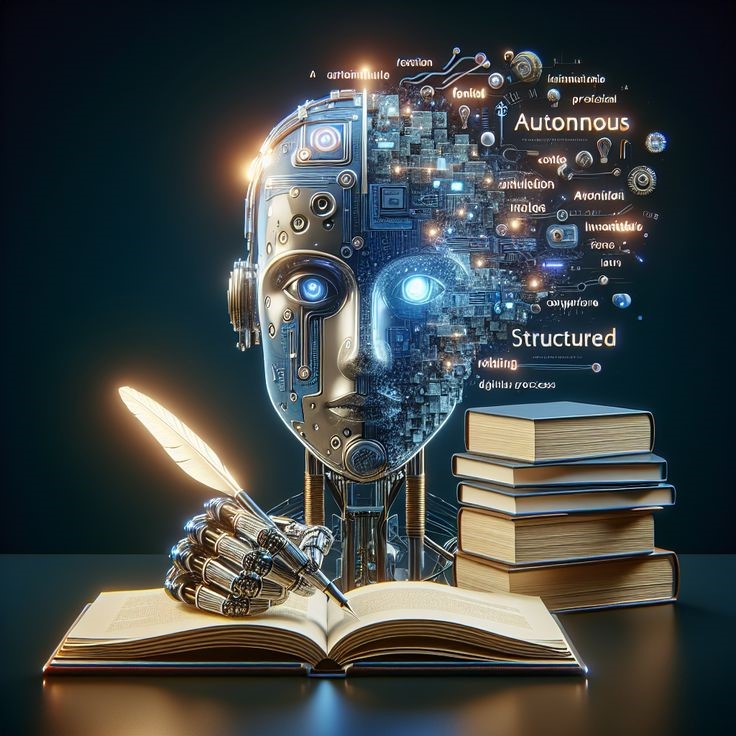
Artificial intelligence in education is revolutionizing learning in 2026; technology is leading to the modernisation of classrooms here in this article opportunities, risks and innovations in using the ai in 2026 has discussed that will takes you to journey of concept.
Table of Contents
Introduction to artificial intelligence in education
Education is evolving rapidly, and the one who has the major contribution in this is artificial intelligence, from personalised learning to automated assessment and intelligent tutoring systems. Artificial intelligence in education is changing how people think, learn, understand, and grow in their academic career. Technology is rapidly changing the classrooms. Unlike traditional classrooms, modern classrooms have come, and the concept of artificial intelligence in education is not futuristic for them; it’s the present need. Many educational institutes and platforms have built AI systems in them for delivering advanced and personalised knowledge to the learners.
Artificial intelligence in education sounds fishy and futuristic to some thinkers, but it’s not that futuristic now; it’s the reality of the present. After COVID, many things have revolutionised the education system, but the major revolution has also been happening since artificial intelligence has launched. Schools, colleges, universities, and online learning platforms are using AI-powered solutions to improve academic performance, reduce academic workforce, and provide personalised learning. Institutions use AI to concise the matter, provide feedback, solve students’ doubts, and provide them the latest knowledge.
With the major benefits, there are a lot of hazards also, such as data insecurity, breach of information, ethical concerns, and high screen time. All of these things are leading to challenges in the path of knowledge, but this is not enough to prove that AI in education is harmful. There can be some preventive measures to stop this, but it will not stop the revolution in the education era due to AI. Artificial intelligence in the education system has grown to Agentic AI in the future that can teach students, but it will not take the place of teachers in any way.
What is artificial intelligence in education?

Artificial intelligence involves using machine learning, natural language processing, and data analytics to support learning, automate administration tasks, and personalise instruction. In the easy way, we can say that it is the use of artificial intelligence that includes machine learning, natural language processing, and predictive analytics to improve teaching, learning, and educational management. Now you will think, when there is a teacher, then what is the need of AI, so we can say that it acts as a facilitator.
Artificial intelligence in education can analyse student performance, their behaviour, and then provide the content and learning material to them. In traditional systems, where all get the same education at the same pace, unmatched to their capabilities and interests, modern AI-driven classrooms provide personalised education at their own pace and capabilities that will help them grow at their own pace. It also helps teachers to understand their students, their performance, and make the content for them by using new technologies, making creative videos and experiments.
How Artificial Intelligence Is Revolutionising Online Education in 2026
The adoption of artificial intelligence in education has completely changed the education system. The greatest benefit of this system is personalised education, where students learn at their own pace and interest. You might have been confused about how students get personalised learning. Actually, AI analyses the behaviour, interests, and capabilities of students through their search history and academic history, and then provides them with feedback, notes, and recommendations by matching their needs and capabilities and then getting feedback from that.
Artificial intelligence in education helps in individual doubt solving and redressal of their problems. Outside their classroom hours, they can get extra content knowledge, can talk virtually to the assistant related to academic issues, can do oral and written test sessions, and after all this, they can get feedback on their performance in every area of study and improve their studies further. AI in 2026 is important for teachers as well, as it will help as an assistant to them that automates their regular tasks so that students can focus on the ultimate goal of knowledge.
Opportunities with AI in 2026

Personalised Education
Every student is different. Their interests, needs, wants, capabilities, and strengths are all different, so how can all of them grow with the same type of content? So here, AI facilitates them by providing personalised education to them. AI analyses students’ behaviour through their history and then recommends content, videos, subjects, and skills matching their strengths and interests. This type of facility helps the growth of students because they will not only receive the best education, but they will also not take study as a burden or something unfamiliar because it is personalised for them. They will also think that this thing belongs to them, so they have to study it.
Improved Engagement
Interactive AI makes interesting interactive notes, videos, study material, educational games, crazy experiments, games, crazy mind maps, and videos of every concept. It solves doubts in an easy way, so students don’t find learning boring. Instead, they actively participate in it and try to make a new step in education every day and try to improve themselves. They will not be within the four walls of the classroom and learning the concepts; they will be actively exploring new concepts each day.
Better Support for Teachers
Artificial intelligence in education is not only an instructor for students but also a facilitator for teachers. Teachers use AI-powered analytics to identify the gaps, make notes, analyse the performance of students, and provide them with additional aids. They can hand over the routine tasks to AI because AI uses automated technologies to efficiently complete the routine tasks of individuals. Teachers can get extra time to focus on students.
High-Quality Teaching Material
AI uses prompts to generate interactive content. Tutors can create interactive notes, assessments, questions, test papers, and case studies to make students active learners. They can create educational games to facilitate students so that they do not feel bored and only focus on cramming.
Innovations Revolutionising Online Education 2026
Intelligent Tutoring Systems
AI provides one-on-one training sessions to students. They provide tailored content, videos, notes, and lectures for students through their prompts or online behaviour. It is the technology that simplifies book lessons for students so that they can learn in their style. AI in 2026 can make changes in the content it provides based on the prompts of the students.
Virtual Reality (VR)
This is the best innovation for the subjects that require practical experience. Virtual reality, if mixed with AI in 2026, can make students practically experience science experiments, history wars, geographical knowledge, agriculture knowledge, and various skills. AI can make tailored videos according to prompts, and students can see them through VR so that they can facilitate learning and experience the realities.
Language Learning
Learning a language is not easy. It requires consistent practice that cannot happen within the four walls and fixed schedules of the classroom. For that, students can use AI to learn it. They can pass their speech to the AI, and AI can give feedback on the stress on words, their speed, clarity, etc., so that they can improve it further. If anyone does not have anyone to talk with in that language to improve their language, then they can talk with AI, and the benefit of this is that AI can also provide them with feedback.
Automate Administrative Processes
Academies can automate their routine tasks by handing them over to AI. AI uses automated technology to automate these tasks. They can schedule tasks, track attendance, manage documents, track teacher performance, redress parents’ doubts and complaints, schedule meetings, etc., to help academies in handling other tasks.
Challenges of Artificial Intelligence in Education

There are various challenges that also arise, while education has tremendous opportunities with AI in 2026. Every individual should take care of these risks related to AI in 2026.
AI takes a lot of data about students, including their records, behaviour, and interests. There is always a high risk of hacking that will cause a lot of risks to the data, so we have to take care of that and do the things that will lead to the security of the data.
Not everyone has the availability of the internet, so it may be possible that a person cannot access the content on the internet.
Using artificial intelligence in education will lead to a lot of dependence of students on technology. That will increase their screen time, and they will also be dependent on AI, which will reduce their creativity and problem-solving skills.
Conclusion
Artificial intelligence in education is important, as technology is changing rapidly and the world is growing towards the culture of modernisation. Students do not want to be confined under the four walls of the classroom. They want to grow further from boring classes that are the same for all. They want to explore personalised learning through AI in 2026. There are a lot of educational opportunities with AI in 2026. AI can provide tailored assessments, notes, content, and feedback to students by analysing their interests and behaviour.
Artificial intelligence in education is changing the view of online education in 2026. Now the focus has shifted to providing individualised lessons to students to make them active learners. This technology is important for students as well as teachers because teachers can use AI to make notes, content, and many things to grow further. But it has some challenges also, as there is a risk to data, increased screen time, and reduced creativity. So, it must be used only as a facilitator, and not everything should be dependent on AI in 2026.
Faqs
What is artificial intelligence in education?
Artificial intelligence involves using machine learning, natural language processing, and data analytics to support learning, automate administration tasks, and personalise instruction.
How is the data not protected with the use of AI?
AI takes a lot of data about students, including their records, behaviour, and interests. There is always a high risk of hacking that will cause a lot of risks to the data, so we have to take care of that and do the things that will lead to the security of the data.
How do teachers get help through AI?
Artificial intelligence in education is not only an instructor for students but also a facilitator for teachers. Teachers use AI-powered analytics to identify the gaps, make notes, analyse the performance of students, and provide them with additional aids.
How does AI give personalised learning to students?
. AI analyses students’ behaviour through their history and then recommends content, videos, subjects, and skills matching their strengths and interests.